

- 11 March, 2026
Why Open Kitchens Don’t Work for Every Indian Home
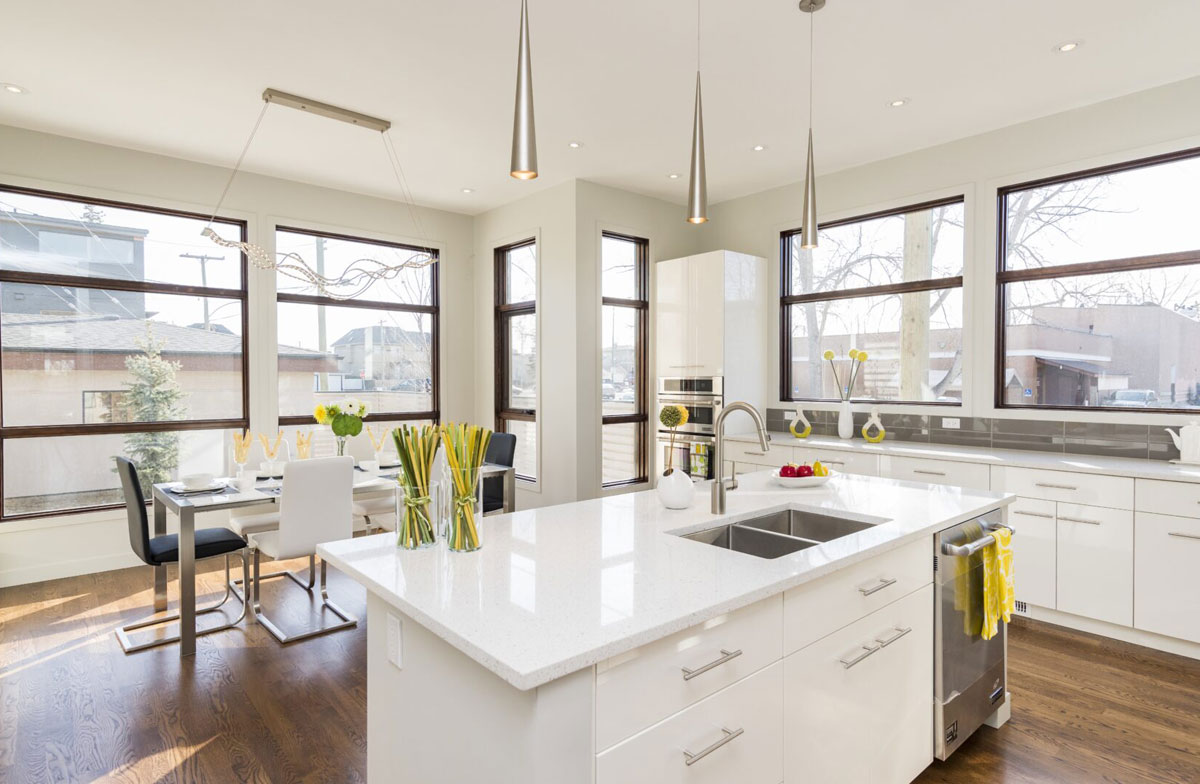
Open kitchens have become one of the most celebrated features of contemporary interior design. They symbolize openness, modernity, and a globally influenced lifestyle. For many homeowners, they represent progress — breaking walls, encouraging interaction, and creating visually expansive interiors. But while open kitchens photograph beautifully, they do not always perform beautifully — especially in Indian homes.
Design trends travel quickly. Lifestyles do not.
And that is where the disconnect begins.
The Gap Between Aspirational Design and Everyday Living
The popularity of open kitchens is largely driven by global design imagery — minimalist European layouts, calm cooking routines, controlled meal preparation.
Indian kitchens, however, operate differently.
They are dynamic, high-energy environments involving:
- Multiple dishes cooked simultaneously
- Strong aromas and spices
- Frequent frying and tempering
- Large utensil usage
- Continuous movement
When a concept designed for light, occasional cooking is applied to an Indian culinary context, friction becomes inevitable.
A space that looks aspirational may not feel comfortable in daily use.
Good design is not about copying trends — it is about understanding how people truly live.
Sensory Spillover: Smell, Heat & Noise
One of the most common concerns with open kitchens in Indian homes is sensory overflow.
Even with high-performance chimneys and ventilation systems, complete containment of:
- Cooking aromas
- Oil fumes
- Heat
- Appliance noise is rarely achieved.
Over time, living rooms and dining areas begin to carry the imprint of the kitchen. The social zone of the house starts to feel like an extension of the cooking space.
A well-designed home allows different zones to function independently without disturbing one another.
The Pressure of Constant Visibility
Open kitchens demand permanent visual discipline.
Because the space is always visible from the living or dining area, even minor clutter becomes amplified. Dishes in the sink, preparation mess, or ongoing cooking instantly affect the visual calm of the home.
In households with:
- Working professionals
- Children
- Frequent guests
- Limited domestic support
Maintaining a perpetually “presentable” kitchen can become a source of stress.
Design should simplify life — not create performance pressure.
Cultural Rhythms and the Need for Privacy
In many Indian households, the kitchen is more than a functional zone. It is:
- A ritual space
- A routine-driven environment
- A focused work area
- Sometimes even a private retreat
Many families value a subtle boundary between the social areas and the cooking space. Not isolation — but separation.
Open kitchens eliminate that boundary entirely.
Constant visual exposure and enforced interaction may look modern, but they do not always align with cultural comfort.
Design that ignores behavior rarely succeeds long term.
Acoustic and Thermal Realities
Two often-overlooked aspects of open kitchens are acoustics and heat transfer.
The sound of:
- Pressure cookers
- Mixer grinders
- Exhaust systems
- Utensils
Travels freely into the living area.
In today’s work-from-home culture, this becomes even more noticeable.
Similarly, heat generated during cooking affects adjacent areas — particularly in compact urban apartments where airflow may already be limited.
Comfort is cumulative. Small daily irritations eventually shape how a home feels.
When Do Open Kitchens Work?
Open kitchens can work beautifully when:
- Cooking is light and occasional
- The home is spacious with strong ventilation
- The family prefers constant interaction
- A secondary utility kitchen is available
- Layout planning includes acoustic and airflow strategy
The issue is not the concept itself — but its blind application
Designing for Indian Realities
The most successful homes are not trend-led. They are lifestyle-led.
Before deciding between open, semi-open, or closed kitchens, important questions must be asked:
- How frequently does the family cook?
- What type of cuisine is prepared daily?
- Who uses the kitchen?
- Is visual privacy important?
- How much maintenance is realistically manageable?
Design decisions must emerge from these answers — not from Pinterest boards.
The Core Insight
Open kitchens are not inherently good or bad.
They are simply one of many design tools.
When used thoughtfully, they enhance interaction and spatial fluidity. When imposed without contextual understanding, they quietly reduce comfort.
True design maturity lies in resisting one-size-fits-all solutions.
A well-designed Indian home does not imitate global trends — it interprets them through the lens of local living.
Because the best spaces are not the ones that look impressive.
They are the ones that support life — effortlessly.