

- 29 September, 2026
Architecture That Responds to Climate: Designing for Delhi NCR
Architecture is not only about designing a beautiful structure but also about knowing the place, the people and the environment in which the structure stands.
For Delhi NCR, the climate in which the buildings stand plays a vital role in architectural planning like the summer heat, sunlight, monsoon, humidity and winters. A well planned structure would be able to combat with the climatic variations and maintain comfort, aesthetics and functionality.
Good architecture works with the climate and not against it.
Understanding the Delhi NCR Climate
Before designing any structure, it is essential that an architect understands the working of the land on which it stands in terms of sun, wind, heat, rainfall etc.
The positioning of the house, room, windows, shading, material and landscaping would then be planned in accordance with the site and its needs.
While there are general considerations for architecture in a given region, climate responsive planning starts with knowing the site.
Designing With the Sun
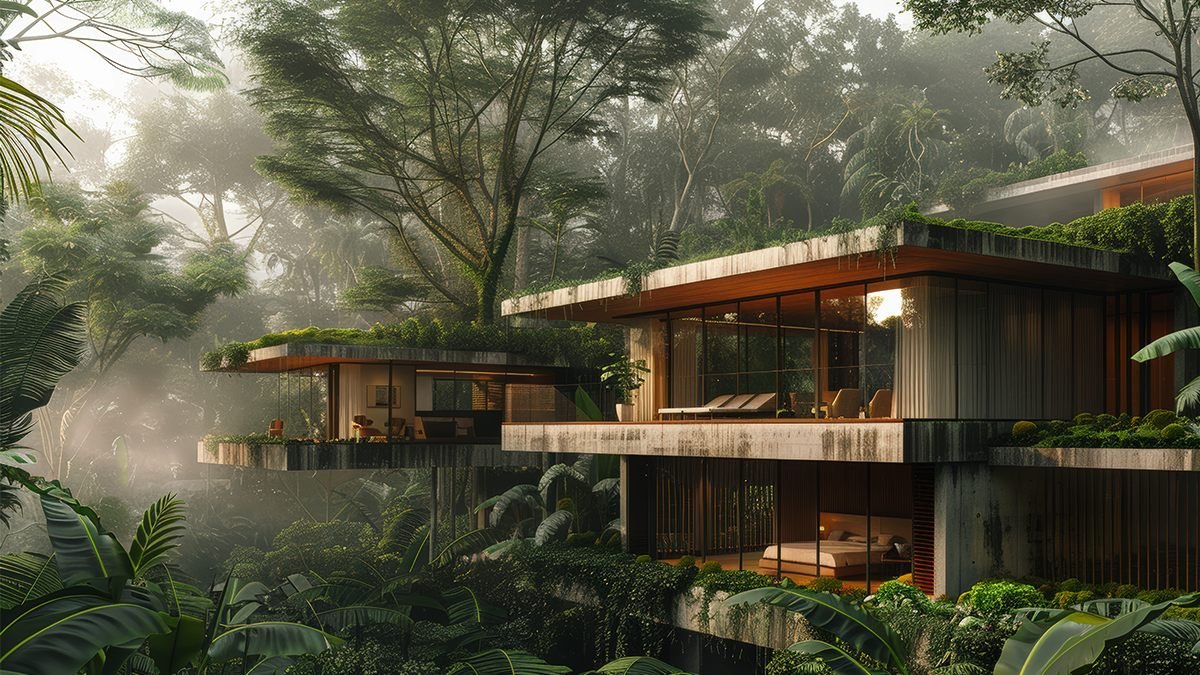
The summer sun can be very unforgiving and it is the architect's job to combat the same. Planning extended overhangs, balconies, recessed windows, louvers and screens can help reduce the direct exposure to the sun without compromising on the amount of desirable sunlight that can enter the house.
It is not about blocking the sun but using it to our advantage. Similarly, windows can play a very vital role in letting in desirable sunlit areas in the house.
Natural Light & Ventilation
Sunlight can change the entire perspective of a house. Thoughtful planning of windows and openings can allow us to usher in the outdoors. Wherever the site and the climate permits, cross-ventilation can also be planned to allow fresh air to circulate in the house. Elements like balconies, verandahs and courtyards can also add to the architectural aesthetics as well as provide a much-needed external interface.
Materials That Respond to the Environment
Working with materials is also a very important exercise when it comes to climate responsive design. Different materials like stone, brick, concrete, wood, glass, metal etc. react differently to the environment and it's essential that one chooses the right fit for your house.
The right material would be one that works well in terms of solar exposure, maintenance, durability and visual appeal.
Designing for the Monsoon
When it comes to monsoon, architectural planning needs to anticipate heavy downpours and design accordingly in terms of roof, waterproofing, terraces, site grading and landscape drainage.
Landscape as a Climate Element
Landscape forms a very important part in climate responsive planning. Apart from providing shade and softening the harsh edges of a built structure, trees and vegetation can also help create desirable microclimates around the house.
For villas and farmhouses, thoughtful plantation can also create a seamless connect between the house and its surroundings. The built structure as well as the landscape around it needs to be seen as a single entity.
Designing for All Seasons
While working for a hot summer climate it is also essential for the architecture to work for the colder winters and the rains in between. Orientation, insulation, shading, natural lighting, waterproofing and material response to weather among other elements play a vital role in climate responsive architectural planning. It is about creating a house that can work well in all seasons.
Architecture That Thinks Beyond Appearance
Though beauty in a structure can often last just for a day, good architecture should be able to perform even decades later.
At Spine Infratech, we believe that architecture is a careful balance of beauty, location, proportion, light, sustainability and endurance. Knowing the climate is an essential first step to developing a responsive architecture.
Right from studying the site to choosing the right material finishes can have a lasting impact on the performance and appeal of a structure.
Because great architecture is not just about designing for a place
but designing in response to it.